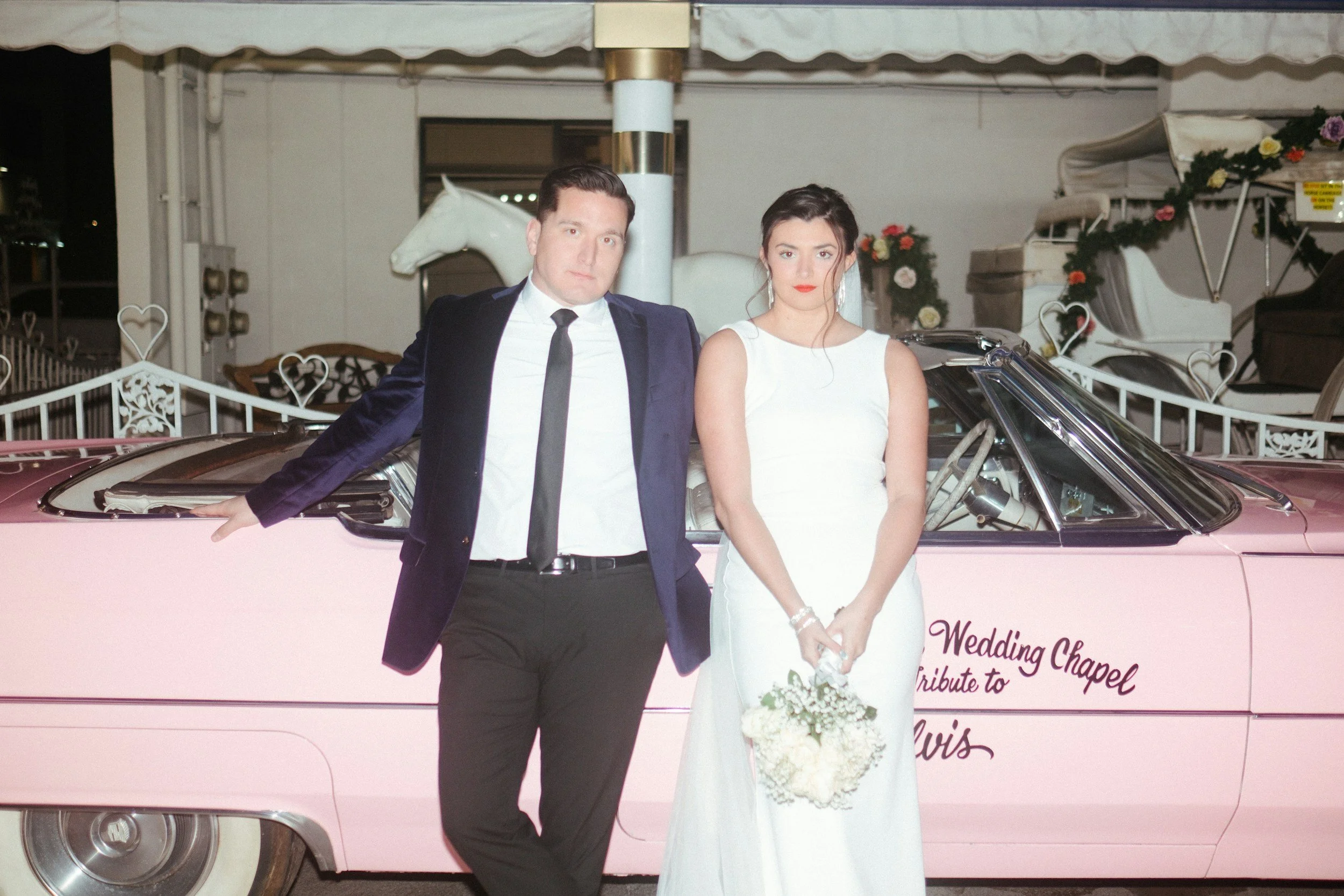
We didn't invent eloping. Vegas chapels have been around forever, and so has the courthouse. Around Spokane, the go-to was the little old Hitching Post in Idaho, known for quick weddings in a room that felt a lot like your grandma's living room. No shade to the Hitching Post. For a long time it was just the only option.
What didn't exist when we opened our flagship Vow Room in Spokane in 2025 was a modern elopement venue that was elegant and affordable. Every single person we told about the idea said some version of "Ooh, how did you come up with that?" There wasn't much competition out there.
So how did we get here? It's a story that goes back a few hundred years.
Eloping Has a Long, Rebellious History
Running off to get married is centuries old. In 1754, England's Marriage Act took effect, and couples under 21 could no longer marry without their parents' consent. Scotland didn't adopt the law, so couples started crossing the border to marry in the village of Gretna Green. In Scotland, all you needed for a legal marriage was a declaration in front of witnesses. Gretna Green got so famous that its name became a catchphrase for elopements and quickie weddings in America.
In the US, the classic elopement was the courthouse. A judge or clerk, a few signatures, done. Some courthouse weddings became iconic. Marilyn Monroe and Joe DiMaggio married at San Francisco City Hall in 1954, and that building now hosts about 7,000 weddings a year.
Then came Vegas. By the 1930s, Nevada had no waiting period and no blood test, which other states required, and wedding chapels popped up in homes around the city. The Little Church of the West, built in 1942, was the first facility designed specifically as a wedding chapel. Vegas is still the wedding capital of the world. Clark County issued 70,598 marriage licenses in 2025.
So eloping was never the new part. For most of history, it just came in two flavors: Vegas kitsch or courthouse paperwork. Meanwhile, the big wedding was turning into an industry.
How the Wedding Industry Got So Predatory
A lot of what we think of as "tradition" was sold to us.
The diamond ring. In the late 1930s, the diamond company De Beers hired an ad agency to create demand for its stones. Around 1940, only about 10% of first-time brides got a diamond engagement ring, according to Campaign Asia. Then came "A Diamond Is Forever," lectures in high schools, and the idea that a ring should cost two months' salary. De Beers made that rule up too. National Geographic points out that diamonds aren't actually rare.
The once-in-a-lifetime dress. The expensive white gown you wear once likely took off with department store bridal salons in the late 1920s, HuffPost reports. Stores saw the money in it.
The gift haul. For most of history, guests weren't expected to bring gifts unless they were family or close friends. Now the registry is practically a line item in the budget.
It's all marketing, and it worked. Couples wanted to profess their love, show it off and throw a once-in-a-lifetime party, and the industry was happy to sell them one. The average wedding in the US now costs $34,200, according to The Knot's 2026 Real Weddings Study.
Here's the thing: a big price tag doesn't buy a better marriage. Economists at Emory University surveyed over 3,000 married people and found that higher wedding spending was linked to shorter marriages. Women who spent more than $20,000 on their wedding were nearly four times more likely to divorce than women who spent under $10,000. The researchers pointed to one likely reason: couples who spent more were more stressed about wedding debt.
From the Kardashians to Generation Wealth
Then reality TV turned weddings into content. In 2011, Kim Kardashian married Kris Humphries in a wedding that cost an estimated $10 million. It aired as a four-hour TV special. The marriage lasted 72 days.
We watched weddings like that on TV and started thinking we should have it too. If you've ever seen Lauren Greenfield's 2018 documentary Generation Wealth, you know the shift we're talking about. The film asks how old American values like hard work and frugality turned into the endless pursuit of more, with Kim Kardashian as one of its examples.
Instagram took it further. Influencers flaunted the flowers, the dresses and the custom everything, and the rest of us were supposed to keep up with an Insta-perfect wedding. Somewhere along the way, we decided that a big wedding with 150 people meant you were loved more. Or maybe it was about the gifts.
The Culture Is Shifting
Now Gen Z is leading the way out. In a 2026 Talker Research survey for Affirm, 69% of Gen Z adults said weddings feel more like a production than a personal celebration. Three in four said wedding culture pressures them to spend money they don't want to spend. They don't want to perform. They want to get married.
Guest lists are shrinking too. The average guest count fell from 184 in 2006 to 131 in 2024, and weddings with 50 guests or fewer nearly doubled their share, per Axios. Some couples are private. Some don't have a lot of family nearby, or a long list of people they want there. That's okay. A small wedding is still a real wedding.
And the industry is catching up fast. Scroll through Instagram or TikTok for five minutes and you'll see elopement venues popping up everywhere. Most of them are Vegas-style chapels. Axios has reported on Vegas-style chapels and micro wedding businesses opening in cities like Boston, Dallas, Portland and Richmond. We think that's cool. If kitsch is your thing, go have the best day of your life.
But not everyone wants Vegas kitsch, and not everyone wants the courthouse aesthetic either. That's where we come in.
What Makes The Vow Room Different
The Vow Room was built for couples who want a small wedding that still feels like a wedding. Gold frames, soft light, a real aisle, a real cake cutting. We kept the little traditions people actually care about, like the first kiss, the vows, and the champagne toast. Then we dropped the rest: the 150-person guest list, the 14-month planning timeline, and the price tag that follows you into your marriage.
The demand for what we do is proven. Couples want elegant, with a few traditional touches. They want it affordable. They don't want to start their marriage in debt, and they want a guest list that's just their people. The Vow Room is a safe haven for that kind of couple, and our model is unique.
The Vow Room Is Coming to a City Near You
Women from all over the country have been reaching out because they want to bring The Vow Room to their city. That makes us overjoyed, and if we're being real, a little overwhelmed. We're meeting with each potential owner one by one, because finding the right fit for the brand and the right location for each Vow Room matters more to us than growing fast.
So keep an eye out. The Vow Room is coming to a city near you.
Thinking about bringing The Vow Room to your city? Reach out to us here.
Sources
Regency History: Why did Regency lovers elope to Gretna Green?
Weddings.Vegas: How did Vegas become the wedding capital of the world
Campaign Asia: When De Beers changed the rules of engagement
National Geographic: The history of diamond engagement rings
Center for Retirement Research at Boston College: When a Diamond Isn't Forever
Talker Research: How Gen Z is pushing back on modern wedding culture
