How to Get Your Marriage License in Spokane County (And What Happens After)

If you've never done it before, "getting a marriage license" sounds like it should be complicated. It isn't. It's one of the most straightforward pieces of paperwork you'll ever file, but nobody hands you a step-by-step the first time around, so you end up piecing it together from old blog posts and a phone call to the county. Here's the whole thing, start to finish, including the part almost nobody explains: what actually changes once you're legally married.
Step One: The Paperwork, Before You Ever Leave the House
Spokane County makes this part easy if you do it in the right order.
Download the application online from the Spokane County Auditor's website. Don't fill it out by hand; the county prefers it typed, so run it through a PDF filler first.
Both of you fill out your own forms. This isn't a one-signature form. Each person completes their own form, including parents' full names, birthplaces, and your mother's maiden name.
Print it and bring it in person. Washington doesn't require a blood test or witnesses for the application itself, just the two of you and photo ID.
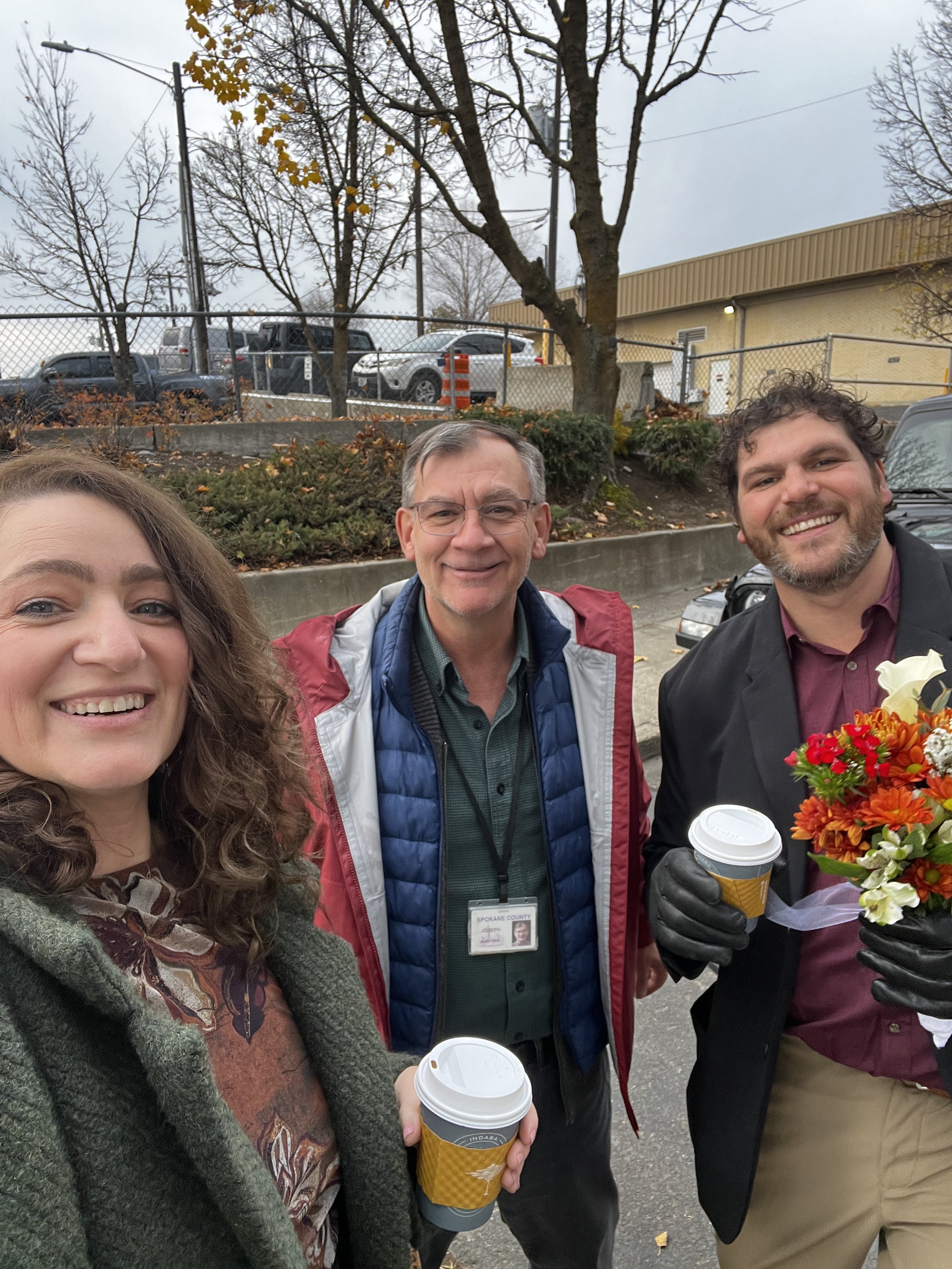
Step Two: Go See Joe
Once you've got your printed forms, head downtown to the Spokane County Auditor's office, which happens to sit inside one of the most beautiful buildings in the city, the historic, castle-like Spokane County Courthouse. Ask for Joe at the marriage licensing counter. He'll take your paperwork, notarize what needs notarizing, and collect payment.
The total cost is $162 plus a $3 fee for one certified copy of your certificate, payable by cash, check, or card (cards carry a small processing surcharge). If either of you is active military, the fee drops to $159.
A few things worth knowing going in:
There's a mandatory 3-day waiting period before the license is valid, starting the day you apply. Apply Monday; the earliest ceremony is Thursday.
No blood test, ever. Washington hasn't required one in decades.
The license is good for 60 days, so you technically have a 3-to-63-day window to get married after you apply.
You must get married somewhere in Washington State. The license doesn't travel across state lines, though a Spokane County license is valid anywhere within Washington.
Step Three: Your Wedding Day
Bring the physical license with you when you arrive at The Vow Room. This part is easy to forget in all the excitement, so we'll ask. After your ceremony, we sign the certificate right there in front of your guests and witnesses, which is honestly one of our favorite parts of the day. It's the moment the whole thing becomes real on paper, not just in the room.
You'll need two witnesses, both 18 or older, to sign alongside you and your officiant. If you're eloping with just the two of you, that's not a problem; ask us ahead of time, and we'll make sure you have witnesses ready.
Once everything's signed, we take care of mailing your certificate in to the county. From there:
You'll receive your official marriage certificate by mail in about 7–10 days.
You can order additional certified copies for $3 each — worth doing more than one at once, since you'll need a certified copy for things like a name change, and mailing in a new request later is slower than just ordering extras up front.
Okay, You're Married. Now What?

This is the part nobody really walks you through, and it's where a lot of newlyweds end up guessing.
Do you have to change your name? No. There's no legal requirement to change your last name after getting married, and nothing about the wedding itself changes it automatically. Your marriage certificate is simply the document that allows you to, if you want to. If you do want to, most people start with the Social Security Administration, then move to a driver's license or state ID, then a passport, using the certified copy of your certificate as proof at each stop. There's no deadline attached to any of it, so it's fine to take your time.
Do you have to file taxes together? No, but you get to choose. Once you're married, the IRS considers you married for the entire tax year, even if your wedding was on December 31st. From there, you and your spouse decide each year whether to file jointly or separately. Most couples file jointly because it usually works out better financially, but it's genuinely optional. It's also worth updating your W-4 with your employer so your withholding matches your new filing status.
What else is worth doing in the first few months?
Update beneficiaries on retirement accounts, life insurance, and any existing wills
Look into combining or coordinating health insurance if one of you has a better plan through work
Add your spouse to bank accounts, leases, or property titles if you're combining finances
Update your emergency contact info with employers and doctors' offices
If you did change your name, loop back to banks, credit cards, and your vehicle title, those tend to get forgotten
None of this has to happen the week after your wedding. But knowing the checklist exists ahead of time saves you from discovering it piece by piece over the next year.
